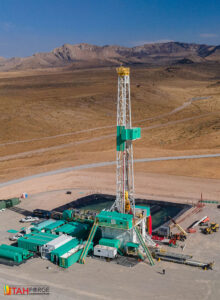
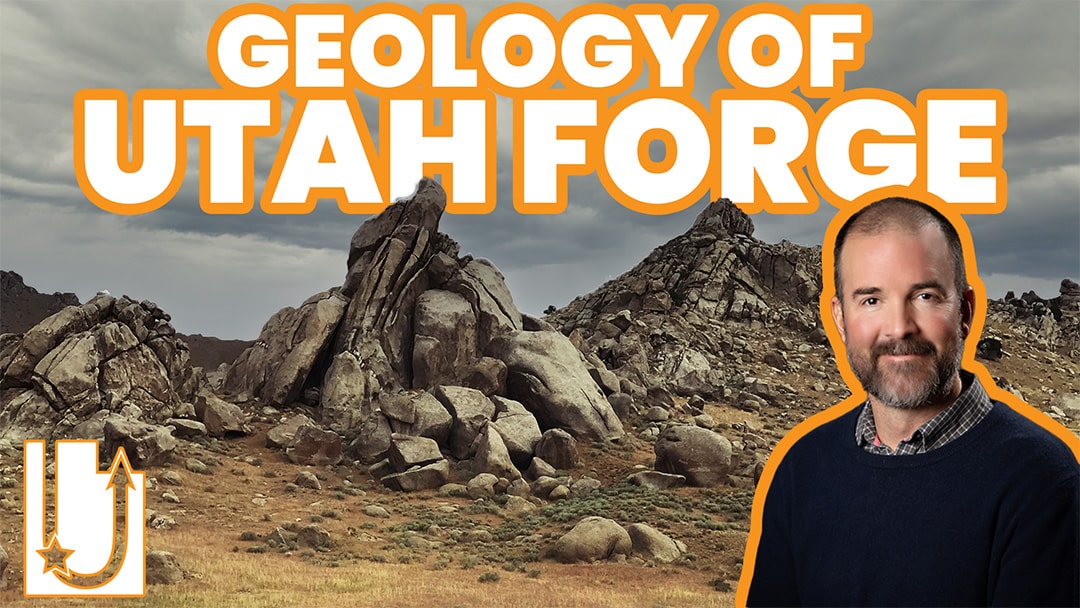
What exactly are the rock types that make up the underground laboratory of Utah FORGE? In this webinar, Dr. Clay Jones describes the geology of the site and surrounding area and the findings from core and cutting analyses of deep wells!


Located on the western half of Ross Island stands Mount Erebus – the tallest active volcano in Antarctica. Mt Erebus is the largest and only active center of the four volcanic peaks (Mt. Bird, Mt. Terra Nova, and Mt. Terror) that make up the triangular-shaped island.
Erebus is the southernmost volcano in the world, and it is most famous for its lava lake and ice fumaroles. Sitting on a relatively thin continental crust, molten magma easily erupts on the surface, having originated from deep in the Earth’s interior. Continuous emissions of gas and steam provide just the right conditions for building towering columns of ice known as ice fumaroles. Volcanic eruptions are frequent, but the blasts are relatively mild and of the Strombolian-type.
The stratovolcano is 3794 meters (12,447 feet) above sea level. The average summit temperature is around -20˚C (-4˚F) during the summer and -50˚C (-58˚F) in the winter.
Erebus glacier extends down the lower flanks of the cone. Where it flows into McMurdo Sound at sea level, an impressive 11-kilometer (~ 7 mile) long ice tongue protrudes into the sea as the annual snowfall exceeds the annual snowmelt. The ice tongue ranges 50 to 300 m (~164 to 984 ft) in thickness and stands 10 meters (33 feet) above the waterline.
Mount Erebus was first discovered and seen erupting by Captain James Ross, an explorer, in 1841 when he and his crew sailed past the island. It was later scaled by members of an expedition led by Ernest Shackleton in 1908. However, in the following 100 years, it has been rarely visited.


All photo credits to Phil Wannamaker.
https://earthobservatory.nasa.gov/images/87444/mount-erebus-antarctica
https://www.volcanodiscovery.com/erebus.html

Active from 1900 to 1904, the Waimangu geyser is the most powerful geyser in history, approximately 20 kilometers southeast of Rotorua on the northern island of New Zealand.

Utah FORGE and Enel Green Power sponsor a geothermal song parody contest for junior high and high school students.

On November 11, 2023, the Natural History Museum of Utah (NHMU) showcased its newest permanent exhibit: “A Climate of Hope.”