At the Core – October 2021 Keep up to date on what is going on at Utah FORGE. Read about it in the...



The direct use of geothermal energy can apply to almost any activity that requires heating (and cooling) for industrial, residential and agricultural purposes. The heat is transferred by hot ground water in the temperature range of 20-120°C (70-250°F) which is produced from shallow wells and then distributed through surface pipework. One very popular direct use application of geothermal energy is for bathing in natural hot springs. Spas all over the world use naturally produced hot water for recreational and therapeutic purposes. In Utah, the Crystal Hot Springs offers warm and mineral-rich baths which attracts numerous visitors throughout the year.
Another direct use application is space heating that may serve a single, stand-alone structure, or more commonly multiple buildings, which are linked by a pipeline that supplies hot water. For regions that are subject to cold winters, this is a cost effective means of heating without contributing to atmospheric pollution. District heating has been in use since the late 1890s when the city of Boise, Idaho started using geothermal energy to heat buildings. District heating is also popular in China, Iceland, France, Germany, Hungary and New Zealand. In the state of Utah, the prison at the Point of the Mountain uses district heating for 330,000 sq. ft. of prison space, saving thousands of dollars over conventional heating systems.
This type of geothermal energy is even used to heat greenhouses to grow plants. The Milgro complex in Newcastle, Utah is one of the largest producers of poinsettias and chrysanthemums in the USA; it uses geothermally heated greenhouses to grow its flowers. This type of energy is also used to heat ponds for aquaculture and fish farming. The warm springs near Grantsville, Utah are filled with warm, mineral-rich water that supports a variety of fish and are also an attraction for scuba-diving activities. Fish breeders in Idaho farm a range of species, including ones requiring geothermally heated ponds, which famously once included alligators!
https://hagermanvalleychamber.com/membership_directory/fish-breeders-of-idaho/

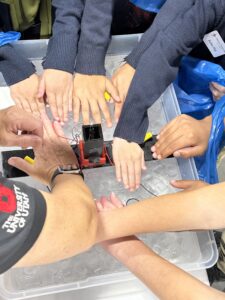
READ ABOUT IT Two teams of undergraduate students from the University of Utah’s Department of Chemical Engineering dominated the first ever AIChE K–12 STEM Outreach Competition. The teams, advised by associate professor (lecturer) Tony Butterfield, took first and...
Among the many speakers and participants at this year's Summit were leaders and proponents of renewable energy sources. This was the Eight's Annual Governor's Energy Summit and second for the UtahFORGE team to represent the project which was among the few mentioned...

Winning teams have been announced in the 2019 Geothermal Design Challenge™ Data Visualization contest. The U.S. Department of Energy (DOE) Geothermal Technologies Office (GTO), in partnership with the Frontier Observatory for Research in Geothermal Energy (FORGE) and...


