The Energy & Geoscience Institute announces Dr. Kristie McLin as Director of Research and Science and new Principal Investigator of the Utah FORGE project, succeeding Dr. Joseph Moore.

Other Resources
Fun with Geothermal
Categories
Feb 17, 2026
The Energy & Geoscience Institute announces Dr. Kristie McLin as Director of Research and Science and new Principal Investigator of the Utah FORGE project, succeeding Dr. Joseph Moore.

Jan 22, 2026
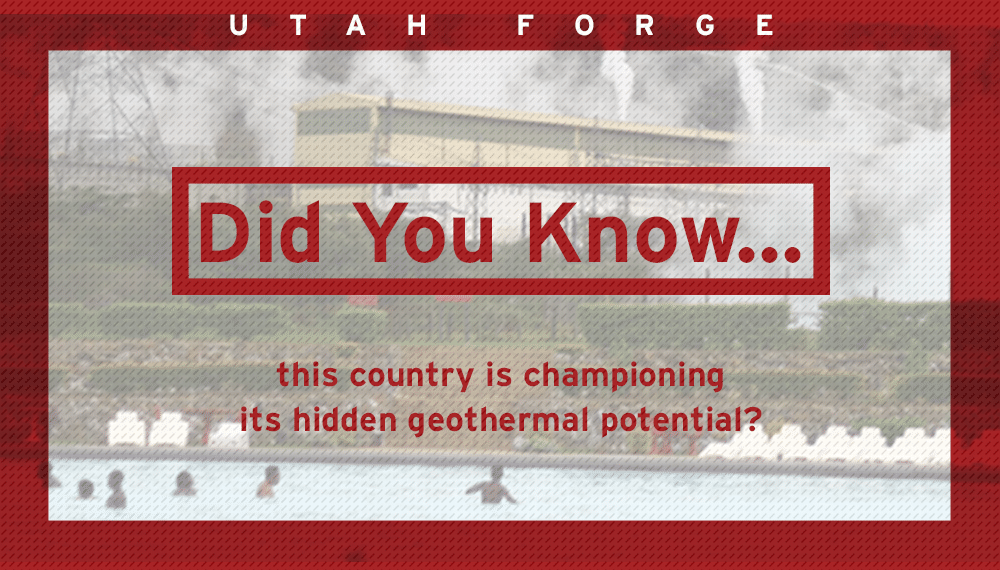
Kenya may not be the first country that comes to mind when thinking about geothermal energy, but it leads the world in geothermal electricity production per capita. Sitting atop the geologically active East African Rift System, Kenya has tapped into the Earth’s heat for power, agriculture, industry, and community development—transforming a once-overlooked resource into a cornerstone of its energy future.
Oct 16, 2025
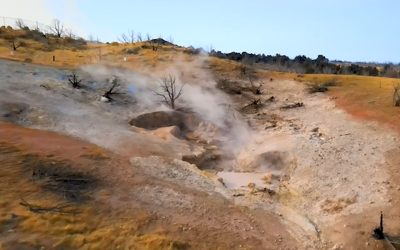
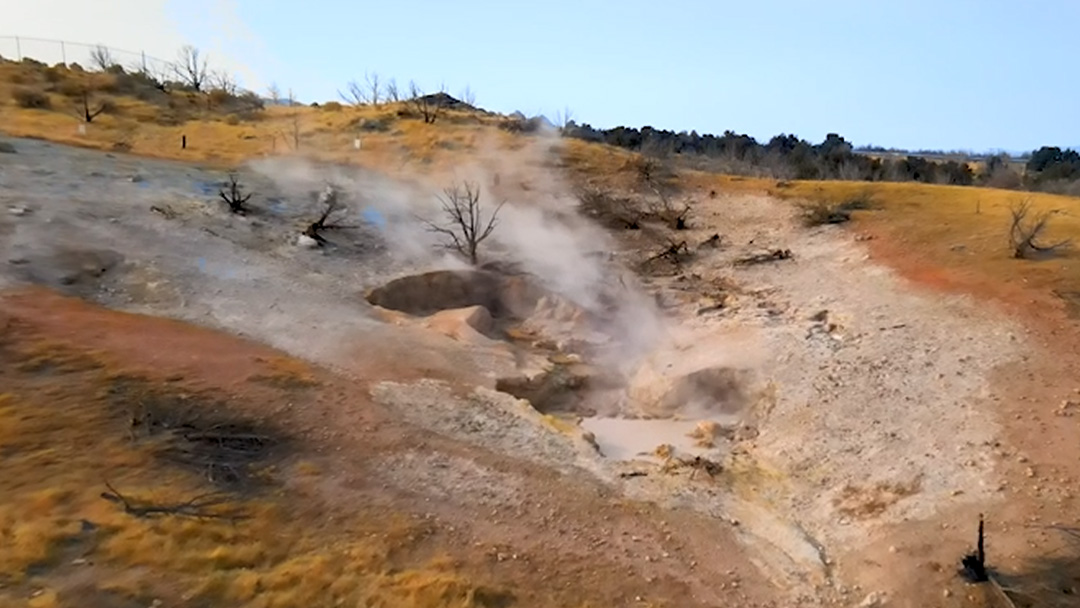
The heat beneath our feet flows through the earth in a complex pattern. Utah FORGE is situated in a heat reservoir that has been studied since the 1970s. In this webinar, Dr. Stuart Simmons delves into the unique geologic and geothermal resources found at Utah FORGE and the surrounding area.

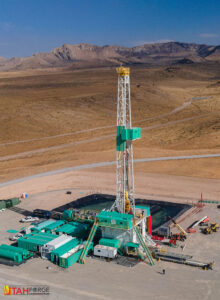
Well 16A(78)-32 drilling was completed in January 2021. This is an inclined well (65°to the vertical) that will be the injection arm of the doublet that forms the heart of the Utah FORGE experimental configuration.
Subsequently, two additional monitoring wells – vertical – were drilled so that they, along with existing well 58-32, could serve as monitoring wells for future work at the FORGE site. In particular, wells 58-32, 78B-32 and 56-32 had been instrumented with fiber optics and geophones to triangulate on microseismic events during the recent fracturing in Well 16A(78)-32. These microseismic clouds define the morphology of three hydraulic fractures created at the toe (extremity) of Well 16A(78)-32.
A chronology of the events for the recent three-stage hydraulic fracturing is as follows:

Figure 1. This is the treatment record for Stage 1. The green trace indicates, the pumping rate, reaching 50 bpm. The red trace is the surface treating pressure, exceeding 6,000 psi. This stage was pumped into the 200 ft long open hole section of the well.

Figure 2. This is the treatment record for Stage 2. The green trace indicates, the pumping rate, reaching 35 bpm. The red trace is the surface treating pressure, exceeding 7,000 psi. This stage was pumped into a cased and perforated zone (10,560 – 10,580 ft MD) section of the well. Note the hard shutdown (rate intentionally rapidly brought to zero) part way through the treatment.

Figure 3. This is the treatment record for Stage 3. The green trace indicates, the pumping rate, reaching 35 bpm. The red trace is the surface treating pressure, exceeding 7,000 psi. The other traces show microproppant concentration at the surface and at the perforations. This stage was pumped into a cased and perforated zone (10,120 – 10,140 ft MD) section of the well.
Following the recovery of the bridge plugs from the well, on April 23, 2022 the rig started rig-down operations and laying down drill pipe.
Feb 17, 2026
The Energy & Geoscience Institute announces Dr. Kristie McLin as Director of Research and Science and new Principal Investigator of the Utah FORGE project, succeeding Dr. Joseph Moore.
Oct 16, 2025
The heat beneath our feet flows through the earth in a complex pattern. Utah FORGE is situated in a heat reservoir that has been studied since the 1970s. In this webinar, Dr. Stuart Simmons delves into the unique geologic and geothermal resources found at Utah FORGE and the surrounding area.

Sep 22, 2025
What exactly are the rock types that make up the underground laboratory of Utah FORGE? In this webinar, Dr. Clay Jones describes the geology of the site and surrounding area and the findings from core and cutting analyses of deep wells!
Advancing innovative technologies to unlock Earth’s limitless geothermal energy.